For Educators &
Other overworked Professionals
Wellbeing Mentorship
A holistic, scaffolded & customizable
2-Part Plan for you
or your institution
Personal Wellbeing 101
&
Communal Wellbeing 201
are a set of modules & activities to help us remember what life is all about...
Spoiler Alert: It's not work, stuff, or status!

Life is about Connection!
...to yourself
...to others
...to the natural world & something greater than yourself

Personal Wellbeing 101
Healing the connection with Body & Soul:
Before we begin to talk about self-care, we must make space and set the foundations of our new way of being. In these introductory sessions, we address the 'elephant in the room.' The #1 barrier to self-care...TIME! We will discuss how to make time by TAKING time for wellbeing and connection. You will also be led through activities designed to reconnect you to your body, reduce stress, and quiet a busy mind. Some of these activities include basic yoga, guided breathing activities, body scans, reflection, and meditation. We will also address what is natural for the human body, mind, and community across time, versus the challenges of modernity our body and mind must face today.Healing the Connection with Heart & Mind:
In Personal Wellbeing 101, we will also be addressing the other foundations of self-care: identifying needs, strengths, goals, values, and core identities. Don't worry, we will not be exploiting your 'WHY' to try to get more free emotional labor out of your workday! But we will address issues such as busyness, toxic productivity, the myth of multitasking, and Hamster Wheel Syndrome. We will address how to avoid the exploitation and gaslighting common to those in 'pink collar' professions. We will talk about how to set boundaries (and what to expect when you do) as we also establish healthy habits and how to build in time for the 'Requisite Rs.' To complete your journey towards empowerment and agency, we also introduce concepts of self-acceptance and self-compassion while reframing concepts like balance, limitations/weaknesses, values vs. virtues, as well as what to do with negative emotions and perfectionism. Finally, we will begin to address the key to sustaining balanced and connected wellbeing...support systems and connection with others.

Busyness + stress = Disconnection
Have we forgotten how to be human together?
Communal Wellbeing 201:
One of the most difficult challenges of the last decade has been the level of conflict and division we face in our society today. This is not limited to just economics and politics either. This polarization has affected relationships at all levels, from friends & families to colleagues, school systems, and entire communities. Unfortunately, although we are designed to operate as an interdependent ecosystem, especially over the last 100 years, we have been systemically disconnected. Once we have started this personal and natural journey of reconnection with Personal WB 101, we are better prepared to reconnect and heal our relationships with others.The interesting conundrum about being human is that we absolutely need others, not only to be happy and resilient through challenges, but, quite literally, we have depended on connected communities to survive and thrive as a species. Yet, it is also people and human-created systems that pose the single greatest threat to our personal and collective survival.
Being a human is hard!
This fact also means that all humans are worthy of grace, understanding, compassion & dignity.
A key aspect of Communal WB 201 is reminding ourselves of the importance of relationships while also teaching you how to heal and grow relationship capacity and social capital even in challenging times & circumstances. We focus on building bridges across divides and consciously cultivating healthy, mutual, and sustainable cultures and communities.

About
The Program
This holistic 2-part wellbeing program is customizable to meet the wellbeing needs of an entire school, institution, or business, or small groups. Ideally, the entire program (Personal WB 101 & Communal WB 201) would take an entire year...1 semester or about 6 months (or 6 in-person sessions of material and activities) to focus and fully integrate each program. Of course, the length of the program or the length of the sessions can be customized to fit your own personal or institutional needs or budgets. Hybrid options also increase program schedule flexibility while providing choice and agency for participants. If you are interested, please reach out for a course catalogue of topics and activities to choose from to design your own yearly professional development program...and give the gift to your educators that keeps on giving. The gift of connected & sustainable wellbeing!For those without institutional support, individual wellbeing mentorship is also available!
You may choose from a single 1-hour session, weekly or biweekly appointments. More affordable than a life coach or therapist, with actual career experience, advice, step-by-step, personal guidance with skills and activities to regain & sustain your own wellbeing. You will also have access to the same course catalogue available to institutions but modified for individual application.See below for individual mentorship plan and pricing options:All clients and participants will be invited to attend my regular Wellbeing Meet-up Group.
The state of things & the critical need for educator well-being
As a historian, I do believe we are living in exceptionally turbulent times. Rapid technological advancements, turbulent political and economic shifts, as well as the existential crisis of climate change leave the future uncertain. These sweeping cultural changes have had a profound effect on schools and classrooms…teachers and students alike. Across the last two decades, educators have endured ridiculous, standardized testing (which most of us know does not accurately assess learning, critical thinking, nor does it reflect a teacher’s skill… but they do reflect socio-economic status, promote rote compliance, all while making a pretty profit for testing companies), simultaneously imposed budget cuts paired with rising demands, expectations, and responsibilities. Public schools especially have had to face the pressures and competition with ‘choice’ and privatization…leaving economically disadvantaged students and districts even further disadvantaged. Since 2020, schools have not only had to survive global medical emergencies; they also returned to school buildings (along with an increase in school shootings), trying to make up for lost instructional time, a gap in student learning and development, as well as dealing with mental and social health crises induced by a year in physical isolation and the compounding impacts of social media. Many public schools have also had to survive hyper-partisanship, combat conspiracy theories, as well as navigate the politicization of culture wars, some of which have devolved school board meetings into reality TV shows. All the while, even when faced with all of these challenges, bureaucratic chaos and forced adoption of harmful technologies, understaffed and overworked teachers have been teaching!The brilliance, resilience, resourcefulness and potential of educators is best summed up in a line recited by Frank Sinatra in 1977’s The New Laugh In:
“We the unwilling, led by the unknowing, are doing the impossible for the ungrateful. We have done so much for so long, with so little; we are now qualified to do anything with nothing.”But just because teachers can does not mean they should, nor should they be expected to. It is my deepest hope that you will prioritize your own wellbeing enough to take part in this program. It is my sincerest desire that schools will begin to prioritize the wellbeing of their teachers, and they will make this year’s professional development plan/hours a gift back to you for all the hard work you have done. It is not the purpose or intent of this program to extract more free labor from you by helping align your work with your “why” or to exploit more emotional labor by telling you to ‘do it for the kids.’ It has been my observation ad experience that you don’t need to tell teachers to ‘do it for the kids.’ That’s why they are there. But most of the time school administration and school boards have forgotten that their job is to take teacher and administration respectively. The biggest wish that I have for my work is to prevent as many teachers as possible from getting to the point that I reached…to choose between something I loved, that I believed was my life’s purpose and that of my physical, mental, and emotional health. No one should have to make that decision. No one should have to let go of what they love because the demands of the job were unsustainable, especially when we can teach teachers how to establish and nurture their own wellbeing…not just as another thing to add to their overflowing plates. But as a responsibility of school institutions and leadership to teach teachers what we should have taught them as students. To teach the teachers the SEL that we ask them to teach and model for students. To give to teachers the same thing we ask or demand they establish with students…healthy, nurturing, collaborative, relationships of care.We truly are living through challenging times of rapid and destabilizing change. If we want to avoid the violence and destruction that great revolutions tend to bring, our greatest hope lies in the next generation and most importantly the education they receive. In order for humans to be at their creative best and come up with innovative solutions that our world requires, people need to feel safe and secure. This can be done through connection with ourselves, one another, and the natural world. But somewhere along the Industrial Revolution and Information Age Road, we have forgotten how to be human and how to be a part of communities. We’ve been trained to ignore our body and emotions and focus our thoughts on material acquisition, competition, task completion, and to hardwire and strengthen the left/logic side of our brains. If we can teach teachers how to reclaim their own wellbeing through balance and harmony, they can embody that sense of harmony and wellbeing. Not only for themselves, but it will be a presence that they bring to the classroom and will not only affect students learning and grades, but it will also have the side effect of modeling wellbeing, connection, and co-regulation for the next generation. This truly embraces Gandhi’s paraphrased quote, “Be the change you wish to see in the world (The actual quote is: “We but mirror the world. All the tendencies present in the outer world are to be found in the world of our body. If we could change ourselves, the tendencies in the world would also change.Affect the life of a teacher, touch the lives of all of their students. The truth is, all need to take better care of our teachers. And I doubt there are many or any teachers our their that are full up on kindness. We all do better when we all do better…So if you want to affect change, change the life of a teacher.
Key Topics, Frameworks
& Embedded Values
My work is influenced and informed by my own experience as well as my own research in trying to understand what happened to me and my career, the general declining state of the teaching profession, as well as how we got ‘here’ as a society.
My work addresses the following topics & values:
Focus on connection, to oneself, others, and the natural world
The barriers that stand in the way of this embodied wellbeing:
-Traumatic stress and ‘complex PTSD’
-Cultural values of busyness, workaholism and toxic productivity
-Myth of multitasking & hamster wheel syndrome vs. mindfulness, presence & focused attention
-Toxic positivity, gaslighting, emotional labor, cognitive load, emotional exhaustion, tech fatigue and teacher victimization
The difference between burnout and demoralization
Attachment Theory
Transformative Listening and (somatic) Co-regulation
Emotional and social intelligence
Character education & servant leadership values and principles
Cultural humility, interculturalism, acknowledgement, acceptance, belonging and inclusion of all forms of diversity (including but not limited to: racial, gender, sexual, socio-economic, religious, generational and other cultural or ethnic diversities, including physical and neurodiversity)
Cultural transformation theory: Partnership systems (vs. Hierarchical or domination systems)
Permaculture & ecological frameworks, especially around sustainability, community and interdependence
Harmony and degrowth
Influencial authors & works
Key works and authors that have had the greatest impact on me, restoring my own wellbeing and my dissertation work include:
• Self-Compassion (Neff, book)
• What Happened to You (Perry, book)
• The Ruthless Elimination of Hurry (Comer, book)
• The Degrowth Manifesto (Saito, book)
• Belonging Without Othering (Menendian, book)
• I Never Thought of It That Way (Guzman, book)
• The works of Riane Eisler, especially Nurturing Our Humanity (book)
• The works of Helena Norberg-Hodge
About
ME
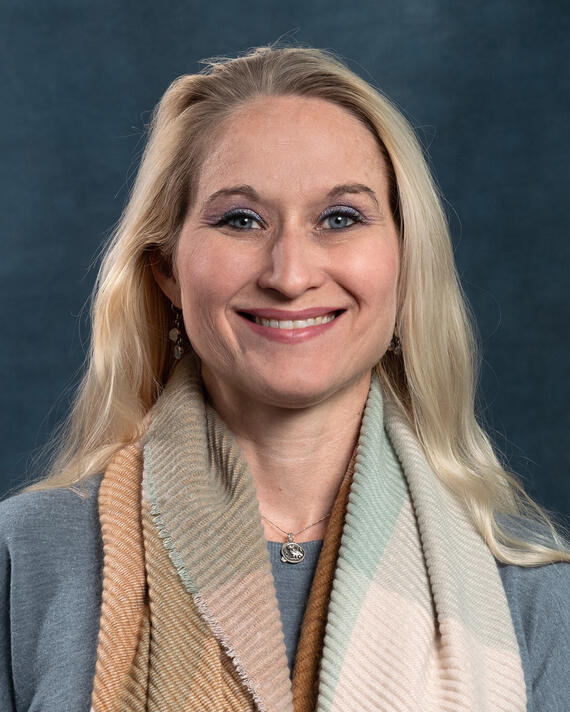
I am Anastasia Hercules and I am first and foremost a philosopher, a “lover (& pursuer) of wisdom.” But learning things just for myself seemed a bit barren and egocentric. So my lifelong passion to pursue understanding and wisdom was just a part of the path to live a life of purpose and meaning. What good is knowledge and experience if you were the only one who benefited? What good is it if you’re not sharing it with others? Once I began to seriously imagine what career I would devote my life to, I knew I wanted to make a difference. Growing up in a rigid and sheltered environment, I wanted to make the world a better place by helping others, like me, find themselves and their potential, purpose and passions. By broadening their perspectives and horizons I also sought to inspire a greater understanding, compassion and empathy for others. For me the choice of becoming a teacher was an easy and obvious one. Afterall, it was my teachers who had the biggest impact in changing my life.Nevertheless, after almost 15 years in high school social studies classrooms, I made the very difficult decision to leave the classroom. It would take me another 2 years in graduate school to officially decide that I would not be returning to the classroom and work I loved so much. After having endured the perfect storm of atypical career anomalies, I have decided to share what I have learned from my educational experiences with other educators. Instead of helping students, I believe is it is the teachers who really need the help and support. It is to them (and the generations of women who never got the nurturing support they needed, including my mom and my maternal grandmother, both who passed away during my doctoral studies) that I devote my current doctoral work and the second half of my career.
Additional qualifications
In order to best prepare myself for facilitating this program either as PD or as personal mentorship, I have completed:
• Traumatic Stress Certificate (From the Traumatic Stress Institute via Pesi, sessions with Bessel Van der Kolk, 7 month program)
• 200 hr. YTT (Yoga Teacher Training)
• Life Coach Certification (Life Coach Training Institute)
For Personal
Wellbeing Mentorship:
FREE 20 min. meet & greet consultation (use the form below to get started)
1 hour single session $55, flexible schedule appointments
2x a month, 1 hour sessions set weekday evening appointments $80 a month ($40 per session)
4x a month, weekly sessions, flexible daytime or afternoon sessions, $150 a month
Note: In order to ensure the best mentorship results, there is a limited number of individual mentoring slots at any given time.
For an institutional or small group Wellbeing Professional Development:
Institutional and Group pricing will vary.
Please contact me via the email below to arrange a consultation meeting.
Go From This...
To This:
Wellbeingmentorship.org © 2026
All rights reserved